Breast augmentation with silicone implants: sizing, recovery, and risks
Silicone breast augmentation adds volume with silicone-gel implants placed under the breast tissue or chest muscle. You need to be 22 or older for silicone implants - that’s an FDA rule [7]. Most patients return to desk work in 2 to 3 weeks. At Snatched, Dr. Paul Boulos handles the sizing, the surgery, and your follow-up visits.
Today’s silicone implants
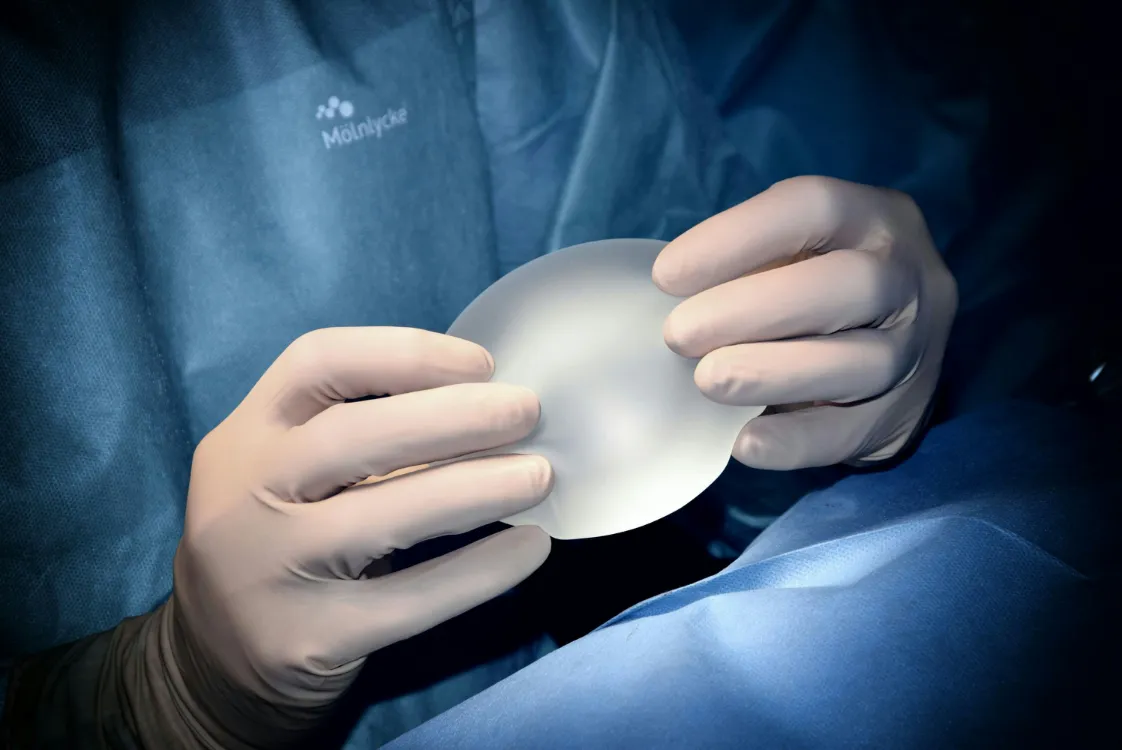
Modern silicone implants are cohesive gel - the ’gummy bear’ type holds its shape even if the shell is cut [1]. They come round or shaped, in several profiles from low to ultra-high. More than 90% of U.S. implants are smooth-surfaced - that’s the current standard for cosmetic augmentation [2].
How sizing really works
Bra-cup sizing alone isn’t reliable. Your surgeon measures your chest width and breast tissue, then uses trial sizers so you can see how the size looks on your own body. The right size fits your frame - go too large for your tissue and you raise the risk of complications and revision surgery.
Where the incision goes
The most common spot is the fold beneath the breast - it gives the surgeon the best access, and it heals into a thin line hidden in the crease. Other options are the edge of the areola or the armpit. Your surgeon usually places the implant under the chest muscle, which gives a more natural contour and lowers the risk of capsular contracture - that’s when scar tissue hardens around the implant.
Recovery timeline
The first 3 to 5 days are usually the roughest - pain medication helps. You can get back to light daily activities within a week; most people are back at desk work in 2 to 3 weeks, and you’ll wear a compression garment for about 6 weeks. Hold off on heavy lifting and strenuous workouts until week 6, or until your surgeon clears you. The implants settle into place over 3 to 4 months - surgeons call it ’drop and fluff.’
The risks, explained clearly
The most common problem is capsular contracture - scar tissue tightening around the implant. One published review puts it at about 3.6% [3]. BIA-ALCL is a rare lymphoma associated with textured implants; the FDA estimates the lifetime risk at 1 in 3,817 to 1 in 30,000 for textured devices [2]. Allergan’s BIOCELL textured implants were recalled in 2019, and the FDA does not recommend removing implants in women without symptoms [4]. Some women report fatigue, brain fog, and joint pain they attribute to implants - the FDA added a boxed warning about these symptoms in 2021 [8], though the medical cause is still debated. Implants don’t last forever: the American Society of Plastic Surgeons says 10 to 15 years is typical before replacement [6].
Frequently asked questions
How do I pick the right size?
Your surgeon’s measurements decide the right size - chest width and tissue. Bring reference photos, but trust those measurements: implants too large for your frame raise the risk of complications and revision surgery.
What is capsular contracture?
Scar tissue forms around every implant; contracture is when that tissue tightens and hardens the breast. It’s the most common implant complication - about 3.6%, according to one published review [3]. Placing implants under the muscle lowers the risk.
What is BIA-ALCL?
A rare lymphoma associated with textured implants - not breast cancer. The FDA puts lifetime risk at 1 in 3,817 to 1 in 30,000 for textured devices [2]. Allergan’s BIOCELL textured implants were recalled in 2019, and the FDA does not recommend removing implants in women without symptoms [4]. Over 90% of U.S. implants are smooth [2].
What about breast implant illness?
Some women report fatigue, brain fog, and joint pain they attribute to implants. The FDA added a boxed warning in 2021 covering these symptoms [8], though the medical cause is still debated. A 2025 analysis found 81.9% of women felt their symptoms improved after implant removal [5].
How long do implants last?
They’re not lifetime devices. The American Society of Plastic Surgeons says 10 to 15 years is typical [6], since the risk of complications goes up over time. The FDA recommends periodic imaging to check silicone implants for silent rupture.
Sources
[1] Plastic and Reconstructive Surgery (via DoctorLogic) - Breast implant generations, cohesive gel types: https://assets.doctorlogic.com/images/sites/s/sarasotaplastic/document/454.pdf
[2] Practical Dermatology - Dr. William P. Adams Jr. on BIA-ALCL risk by implant texture: https://practicaldermatology.com/topics/skin-cancer-photoprotection/an-update-on-breast-implant-associated-anaplastic-large-cell-lymphoma/22995/
[3] Prosthesis (MDPI) - Systematic review: capsular contracture rates after augmentation: https://mdpi-res.com/d_attachment/prosthesis/prosthesis-07-00038/article_deploy/prosthesis-07-00038.pdf?version=1743501604
[4] Oncology Nursing News - FDA action on Allergan BIOCELL textured implants (2019 recall): https://oncnursingnews.com/view/fda-takes-action-against-breast-implant-associated-cancer
[5] Aesthetic Plastic Surgery (Springer) - 2025 meta-analysis: symptom improvement after explantation: https://link.springer.com/article/10.1007/s00266-025-05142-x
[6] American Society of Plastic Surgeons - When to replace breast implants: https://www.plasticsurgery.org/news/articles/is-it-time-to-replace-your-breast-implants
[7] U.S. Food and Drug Administration - Types of breast implants (silicone implants approved for augmentation at age 22+): https://www.fda.gov/medical-devices/breast-implants/types-breast-implants
[8] U.S. Food and Drug Administration - FDA strengthens safety requirements for breast implants (Oct 2021, updated labeling including boxed warning): https://www.fda.gov/news-events/press-announcements/fda-strengthens-safety-requirements-and-updates-study-results-breast-implants
Explore your procedure options or book a consultation with our team.